
One Funnel Away Challenge Review 2026: Is the $100 Worth It?
A $100, 30-day daily-mission program that walks you through building a real funnel, taught by Russell Brunson or Trey Lewellen.
The One Funnel Away Challenge is a $100 (plus shipping), 30-day training program that gives you a daily "mission" to build a real sales funnel from scratch, taught by either Russell Brunson (digital products/info products track) or Trey Lewellen (ecommerce track), with community support and a 14-day ClickFunnels trial included to actually build what you're taught.
That's what it is in one sentence. Below is exactly what the 30 days cover, who each track fits, and whether the structure is worth it versus just watching free funnel-building content on YouTube.
- Price: $100 one-time, plus shipping ($19.95 US / $29.95 international) — sometimes bundled as a free add-on during ClickFunnels trial signup promos, so check the current offer before assuming you'll pay full price.
- Format: 30 days, split into 4 weeks of daily "missions" (video lessons + action steps), not a one-time course dump.
- Two tracks: Expert (Russell Brunson — info products, coaching, courses) or Ecom (Trey Lewellen — ecommerce/physical products).
- Guarantee: 30-day money-back if you complete the training and don't get the promised value.
What's actually included
The 4-week structure (Expert track):
- Week 1 — Foundation (missions 1–7): defining your offer and audience before touching any software.
- Week 2 — Create Your Offer (missions 8–14): building the actual product/offer stack.
- Week 3 — Build Your Webinar (missions 15–21): the core sales mechanism the Expert track is built around.
- Week 4 — Traffic & Audience (missions 22–28): getting people into the funnel you just built.
The Ecom track (Trey Lewellen) follows the same daily-mission format but focused on physical product funnels instead of webinars/info products.
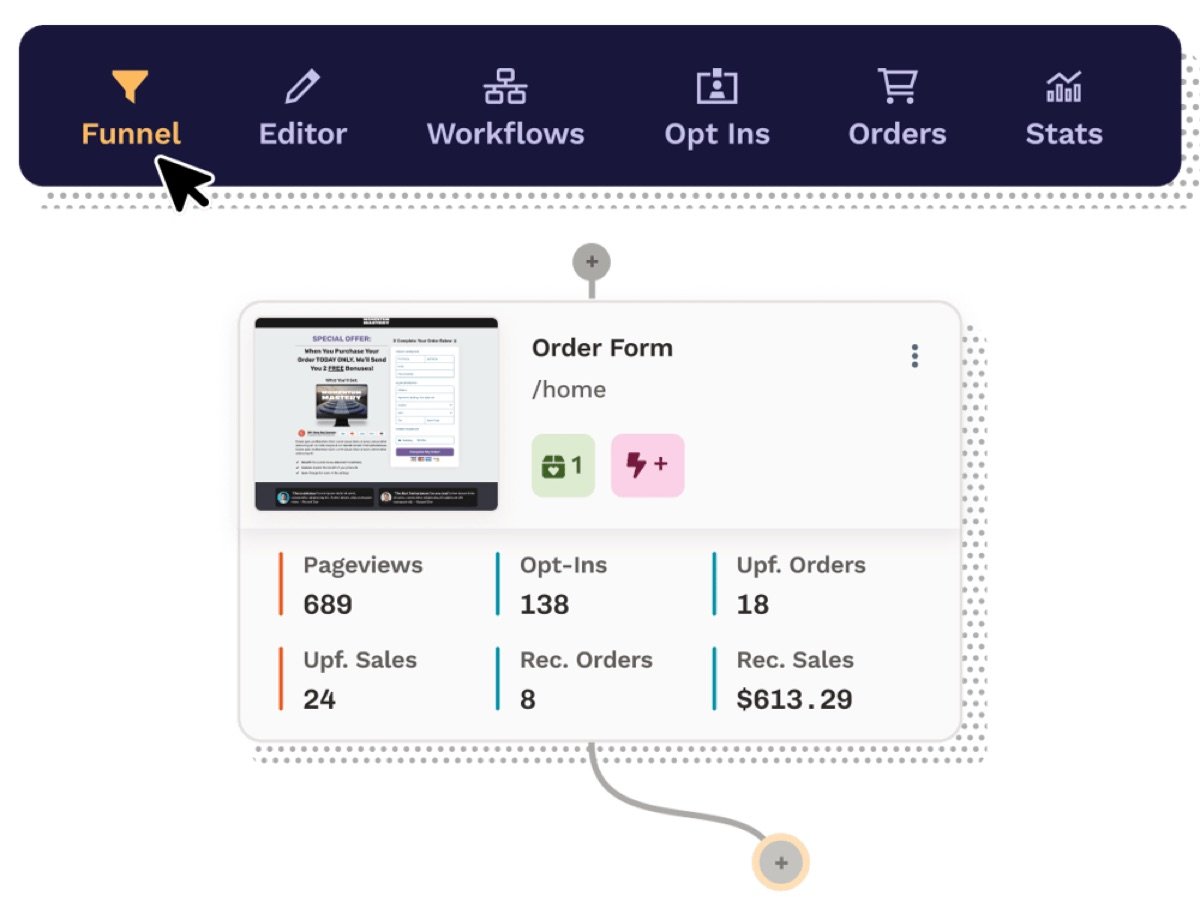
Beyond the daily lessons: a 14-day free ClickFunnels trial, so you're building the funnel in real software as you go, not just watching theory; private community access with round-the-clock support and accountability coaching; and guest trainer sessions in addition to the two main instructors. The screenshot below is the actual ClickFunnels editor you'll be building in during the challenge.
Pros
- Daily structure beats a video library. A "watch 40 hours of course content whenever" format has a much lower completion rate than 28 bite-sized daily missions with a deadline — the structure itself is a big part of the value here.
- You build a real funnel, not just a plan. Because the ClickFunnels trial is bundled in, the challenge forces you to actually publish something rather than end with a list of ideas.
- Track selection matters and is done right. Splitting Expert (info/webinar) from Ecom (physical product) instead of one generic track means the missions are actually relevant to what you're building, not generic marketing advice.
- Real accountability, not just content. Community + coaching calls address the biggest failure mode of self-paced courses: nobody finishes them alone.
Cons
- 1–2 hours/day commitment. This isn't a passive watch-and-absorb product — missing days compounds fast in a 30-day sequential structure.
- The free ClickFunnels trial runs out before the challenge does. 14 days of trial against a 30-day challenge means you'll likely need to commit to a paid ClickFunnels plan partway through if you want to keep building.
- Best fit is narrow. Digital products, coaching, courses, or straightforward ecommerce fit well; local service businesses, brick-and-mortar, or complex B2B sales cycles don't map onto either track cleanly.
- Won't produce overnight results. It's a structured starting point, not a shortcut — the "2,000+ Two Comma Club members took this challenge" stat reflects people who kept building long after day 30, not results from the challenge alone.
Who should (and shouldn't) take it
Good fit: someone with an idea for a digital product, course, coaching offer, or ecommerce product who needs structure and a deadline to actually launch — not someone who needs more funnel theory, but someone who needs to be forced to publish.
Poor fit: anyone expecting a passive course they can binge later, local/service businesses without a clear digital or ecommerce offer, and complex B2B sales that don't fit a single-funnel model.
Frequently asked questions
How much does the One Funnel Away Challenge actually cost?
$100 one-time, plus shipping ($19.95 US, $29.95 international) for physical materials. It's sometimes offered as a free bonus during ClickFunnels trial signup promotions — check the current offer before assuming the base price applies.
Do I need a ClickFunnels subscription to do the challenge?
You get a 14-day free ClickFunnels trial as part of the challenge, which is enough to complete the software portions of most early missions. Since the challenge runs 30 days, you may need to continue on a paid ClickFunnels plan to finish building past day 14.
What's the difference between the Expert and Ecom tracks?
Expert (taught by Russell Brunson) focuses on info products, coaching, and webinar-based sales funnels. Ecom (taught by Trey Lewellen) focuses on funnels for physical/ecommerce products. Pick based on what you're actually selling, not which instructor you've heard of.
Is there a refund if the challenge doesn't work for me?
Yes — a 30-day money-back guarantee applies if you complete the training and don't get the promised value.
How much time does the challenge take per day?
Expect roughly 1–2 hours per day across the 30 days — it's a daily-mission format, not a self-paced binge course, so consistent daily time is part of how it's designed to work.
Is the One Funnel Away Challenge good for a local service business?
Not really — both tracks are built around digital products, courses, coaching, or ecommerce funnels. Local/service businesses without a clear digital offer won't get as much direct value from either track.
The verdict
The $100 price tag is almost beside the point — what you're actually paying for is a deadline and daily structure that most people don't build for themselves. If you already have an idea for what you're selling and just need to be forced to actually launch it in 30 days instead of planning indefinitely, the challenge format works. If you're still figuring out what to sell, the structure will feel rushed rather than helpful — sort that out first, then take the challenge.
Related reviews
This article contains affiliate links. We may earn a commission if you purchase through them.